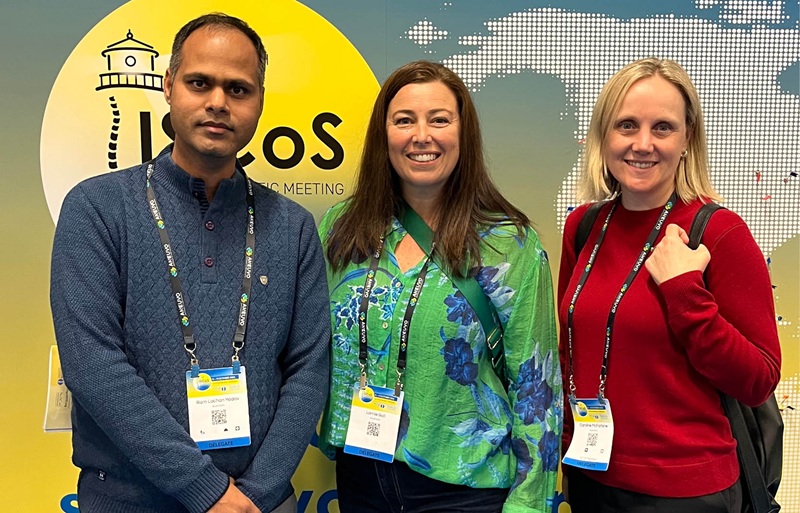
Stepping into the role of International Research Collaborations Manager less than a year ago, I knew I had joined a vibrant global SCI community but nothing prepared me for the experience of attending my first ISCoS (International Spinal Cord Society Annual Scientific Meeting) in Gothenburg. ISCoS 2025, held in partnership with the Nordic Spinal Cord Society (NoSCoS), drew about 1,100 delegates from 52 countries and created a dynamic meeting of international expertise. Supporting the SRI’s 11 SCI Collaboration Grant recipients as they presented, networked, and found their place within this global gathering has been one of the highlights of my role so far.
One of the most energising moments of the week was the SRI Early Career Researchers Breakfast – a by-special-invitation opportunity for this year’s SCI Collaboration Grant recipients to meet one another, connect with past recipients, and spend time with senior researchers/mentors and the SRI team before the scientific sessions began. The event echoed one of the conference’s strongest themes: that meaningful progress in spinal cord injury research relies on genuine collaboration across disciplines, countries, and career stages.
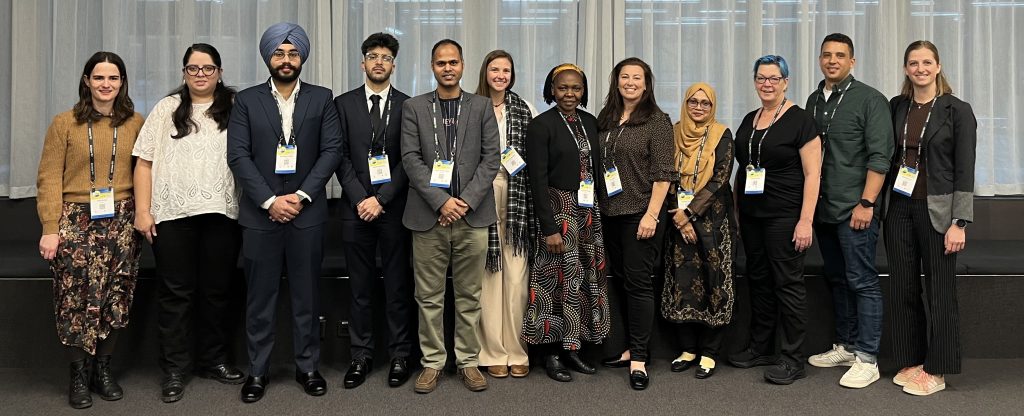
Above: Larnie Ball, fifth from right, with the eleven 2025 SCI Collaboration Grant Recipients
What made the breakfast particularly impactful was the diversity of voices in the room and the wisdom and insight freely shared by senior researchers – a rare chance for emerging researchers to engage closely with leaders in the SCI field. Senior figures including Dr Harvinder Singh Chhabra (India), past President of ISCoS; Dr Colleen O’Connell (Canada), clinician-researcher and Research Chief; and Dr Jennifer Coker (USA), Associate Professor and psychosocial research expert, spoke candidly about their experiences. It was equally inspiring to see past SRI Collaboration Grant recipients, such as Dr Gillean Hilton (Australia) and Dr Annie Palermo (Australia), return to encourage this year’s cohort. Their presence added depth, credibility, and a strong sense of continuity within the SRI community.
Across all speakers, a clear message emerged: collaboration is the engine of progress. Breakthroughs happen when clinicians, basic scientists, engineers, rehabilitation teams, and people with lived experience work together. Stepping beyond professional comfort zones, and beyond disciplinary boundaries, enables stronger science and richer insights.
Speakers encouraged emerging researchers to “put themselves out there”: talk to people, name what they want to learn, and approach colleagues whose work they admire. Several described how their own careers expanded by embracing new methodologies or entering fields far outside their original training. Opportunities often appear when you articulate what you are seeking, because the right collaborator may be sitting at the next table.
Equity was also a central theme. Despite representing most of the world’s population, many low- and middle-income countries still lack foundational epidemiological data on SCI. The work of emerging researchers in these settings is not only important – it is urgently needed. Contributions from LMIC-based grant recipients at the breakfast were powerful reminders of the global importance of inclusive, context-specific SCI research.
Beyond the formal program, the conference offered countless informal moments that enriched the experience for the SRI grant recipients forming new friendships, sparking potential collaborations, and creating genuine peer-to-peer learning. I often saw grant recipients turn to one another with spontaneous “teach me” or “explain this to me” requests, showing deep respect for each other’s research experiences.
For me, ISCoS reinforced why the SCI Collaboration Grants matter. They open doors to visibility, mentorship, international partnerships, and the confidence to imagine new futures in SCI research.
If you are considering applying for an SCI Collaboration Grant or attending ISCoS 2026, I encourage you to take the leap. The opportunities to learn, connect, and contribute to the future of SCI care and research are extraordinary, and the global SCI community is ready to welcome you.
For updates on future grant rounds and events, join the SCoRH platform – SRI’s online hub for connection, collaboration, and global engagement.
